
THE MEMORY MACHINE
How the Chip Industry Learned to Starve Its Own Customers, Twice

In February 2024, Marc Garciaguirre bought a 16-gigabyte memory kit for a laptop upgrade on Amazon for about the price of a nice dinner. Eighteen months later, he was back on the same website, paying nearly four times as much for a comparable part. He is now a named plaintiff in a federal antitrust suit that accuses the three companies that make almost all of the world’s memory chips of doing something the industry has done twice before: agreeing, without ever quite saying so, to make less.
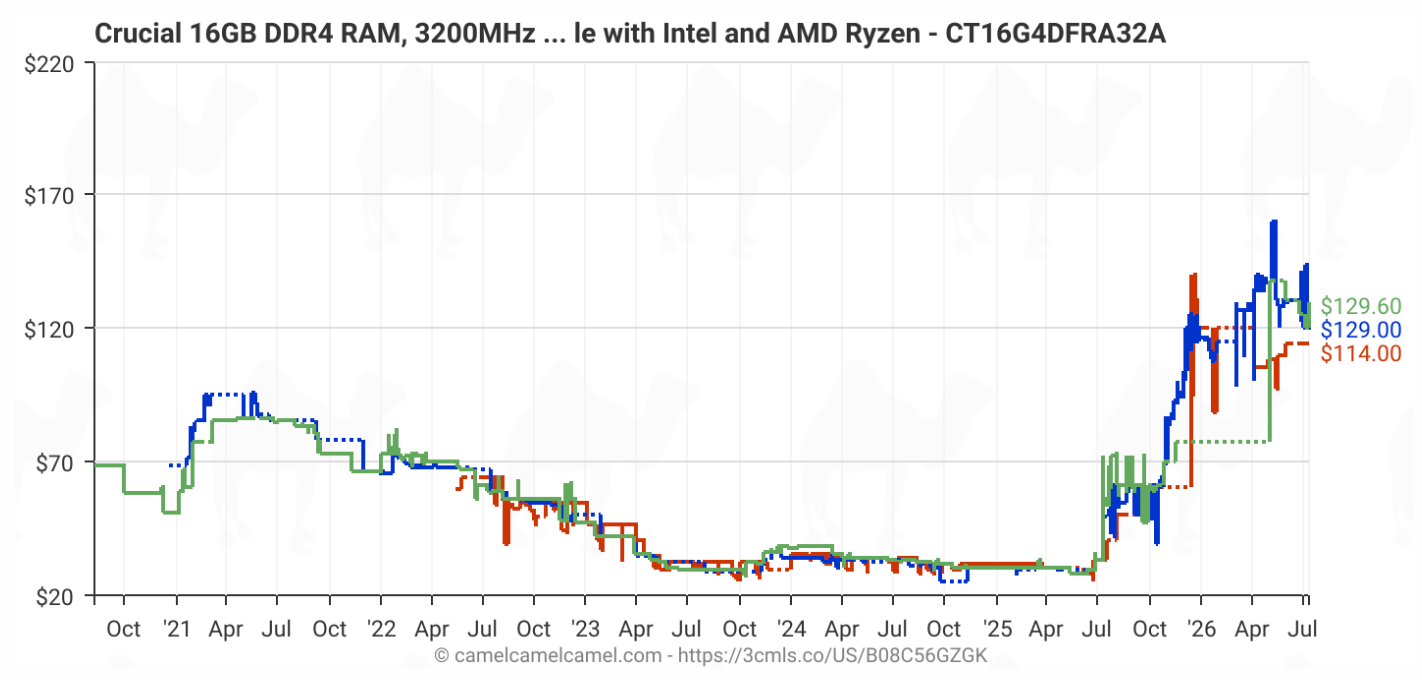
The suit, filed in the Northern District of California on June 25, 2026, against Samsung Electronics, SK Hynix and Micron Technology, describes a 697 percent rise in the contract price of ordinary computer memory since late 2024, a shortage severe enough that retailers in Tokyo, Seoul and Taipei have started rationing memory sticks like they were toilet paper in the spring of 2020, and a decision by Micron to shut down Crucial, one of the best-known consumer memory brands in the country, at the exact moment its prices were setting records. The companies say the increases simply reflect a memory market reshaped by artificial intelligence, which has created unprecedented demand for the specialized chips that feed AI accelerators.